Load changes sharply
Traffic spikes during campaigns or seasons, and the infrastructure has to adjust automatically.

A container orchestration platform: deploying, scaling and recovering services. We choose it when a product has outgrown a few servers and cannot go down.
As a product grows, manual server management becomes a bottleneck and every release a risk. Kubernetes scales and recovers services on its own, so the product handles peaks without night shifts.
Traffic spikes during campaigns or seasons, and the infrastructure has to adjust automatically.
There are so many services that deploying and updating them by hand is no longer possible.
Updates ship regularly, and users should not notice any interruptions.
Autoscaling services to match load and isolating environments.
Horizontal scaling for sale peaks and ad campaigns.
Deploying, updating and rolling back services via Helm and CI/CD.
Managed clusters on AWS, GCP or DigitalOcean, or self-managed on Hetzner.

 OCTOBER 2026eСommerce / DEVELOPMENT
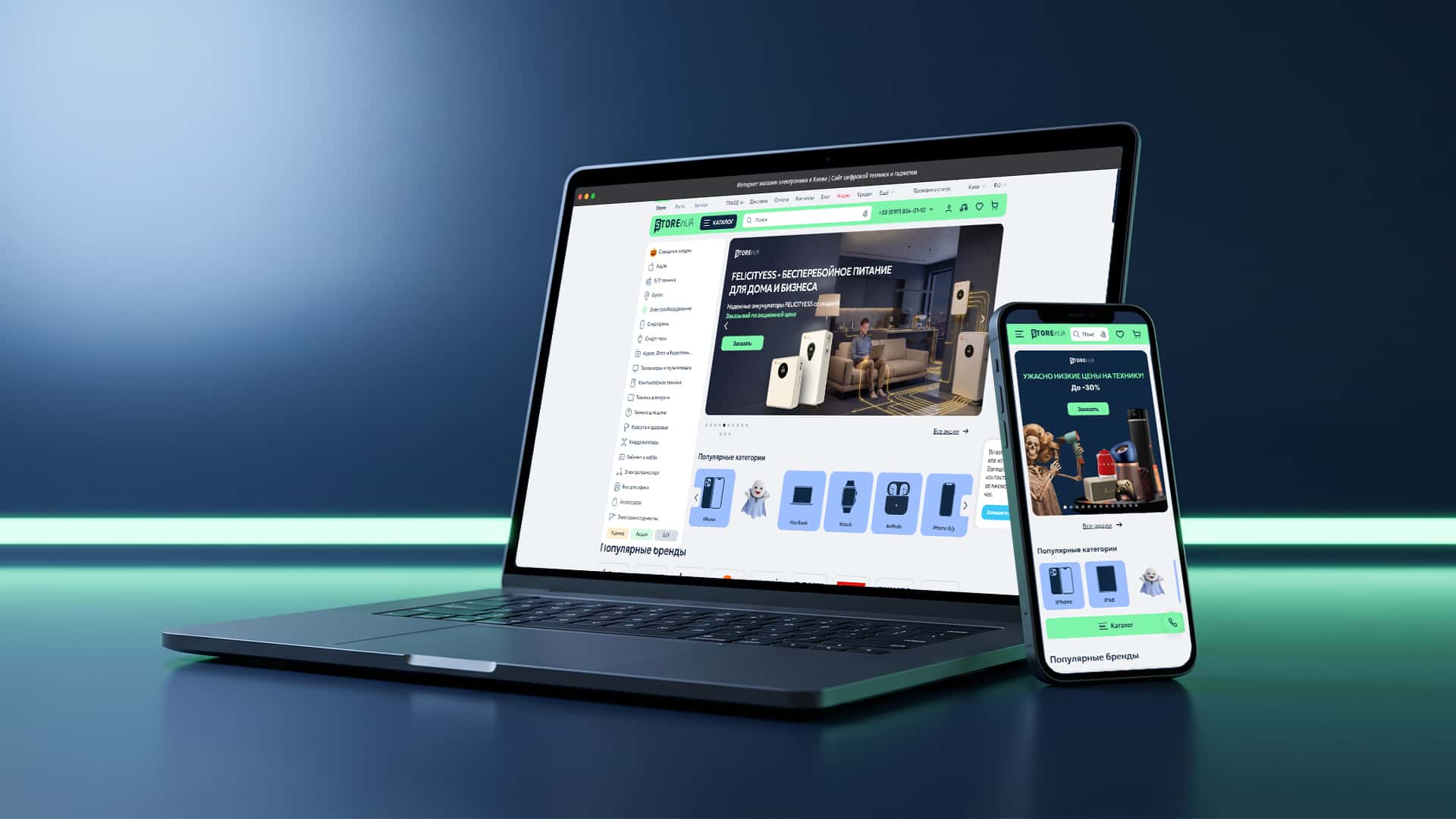
Purchase conversion up from 1.4% to 3%: a new platform for 1M+ products with no sales stoppage.
Book a Clarity Session—a 30-minute review of your marketing. You will receive a map of bottlenecks and a clear understanding of the next steps.

Clarity first. Then — managed and systematic growth.
The team took a professional approach to upgrading site, ensuring high-quality project delivery without interrupting the store’s operations.
 Nikolay LuchinskyRetail Director / STOREinUA
It depends on scale. For a website or small app, Kubernetes is overkill: it adds complexity and maintenance costs. It pays off when there are many services, load fluctuates or downtime is unacceptable.
A few servers with Docker work well at the start. As services and servers multiply, Kubernetes takes over load distribution, restarts after failures and zero-downtime updates that would otherwise be done by hand.
It depends on cluster size and provider. Managed cloud clusters remove part of the administration but still need monitoring and updates. We assess whether it makes sense and what it costs in a Clarity Session, before making the infrastructure more complex.
GVSPACE implements Kubernetes for SaaS platforms, marketplaces and microservice products that need autoscaling and zero-downtime releases. We deploy managed clusters on AWS, GCP or DigitalOcean, or self-managed ones on Hetzner, and set up Helm, CI/CD, monitoring and backups. Before implementation, we check whether the product has really outgrown simpler infrastructure, so we do not add complexity without need.