The product is finding its model
An MVP or new service where the data set and scenarios change after every round of feedback.

A document NoSQL database that stores data in a JSON-like format. We choose it when the data model is still taking shape and a rigid schema would slow launch.

Early on, a product's data structure changes all the time. MongoDB's flexible schema lets you add fields without migrating the whole database, so the team builds features instead of reworking tables.
An MVP or new service where the data set and scenarios change after every round of feedback.
Catalogs, profiles or content where each record has its own set of attributes that do not fit one table.
The business collects many records of user actions and wants to scale storage without redesigning the architecture.
A flexible document schema, so the data model can change without a migration at every step.
Nested documents for products that have different sets of attributes.
Articles, comments and metadata in one document, so a page is built with a single query.
Aggregation queries and scaling for event streams from applications.
 OCTOBER 2026eСommerce / DEVELOPMENT
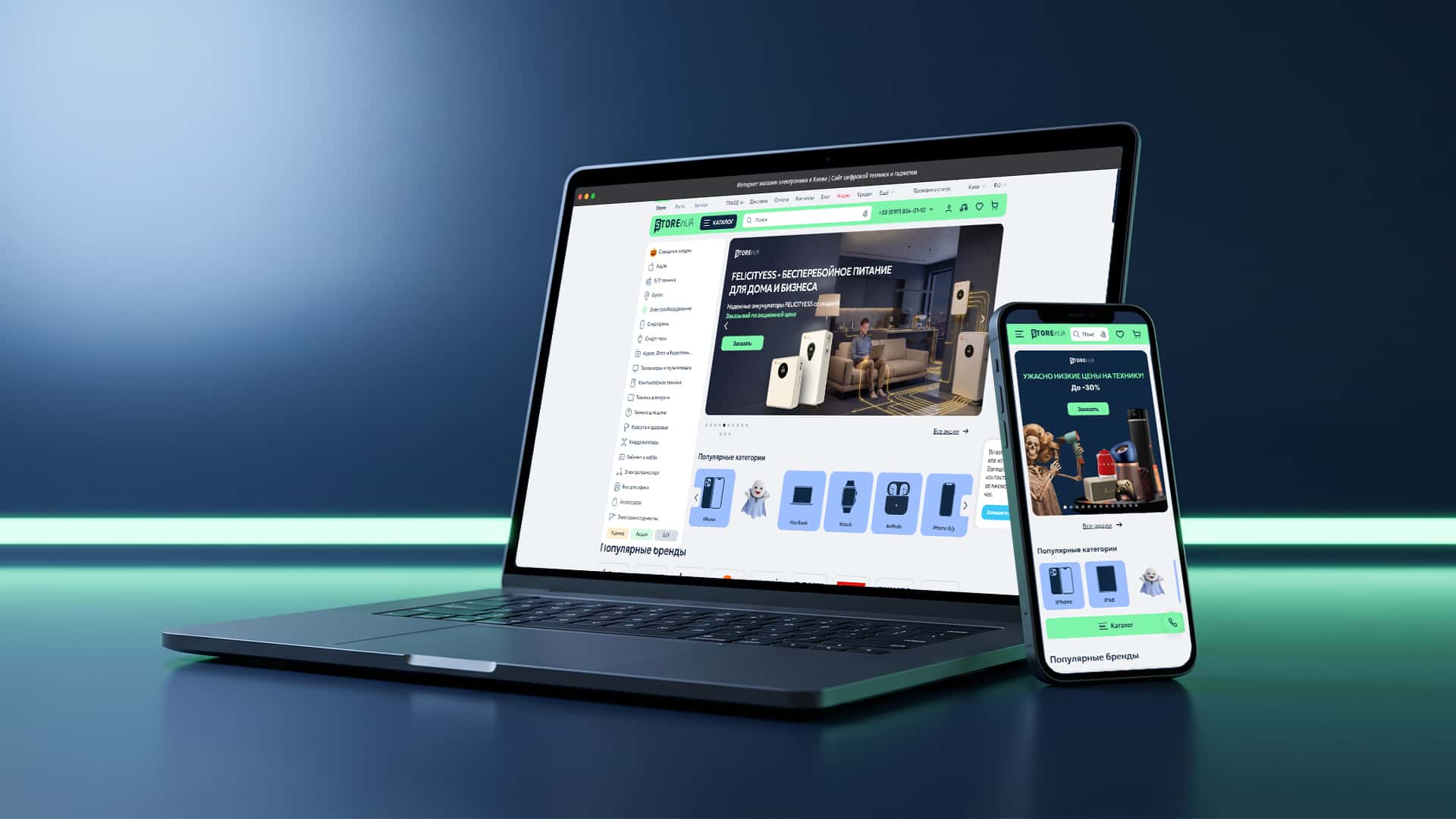
Purchase conversion up from 1.4% to 3%: a new platform for 1M+ products with no sales stoppage.
Book a Clarity Session—a 30-minute review of your marketing. You will receive a map of bottlenecks and a clear understanding of the next steps.

Clarity first. Then — managed and systematic growth.
The team took a professional approach to upgrading site, ensuring high-quality project delivery without interrupting the store’s operations.
 Nikolay LuchinskyRetail Director / STOREinUA
It depends on what you store. It works well for a catalog with mixed attributes, but for orders, payments and stock, where consistency is critical, a relational database is often more reliable. In such projects we sometimes combine both.
It depends on the data. PostgreSQL is stronger where there are many relationships between entities and complex reports. We choose MongoDB when records differ in structure or change quickly, and a rigid schema would hold back product development.
No, if the data model is planned ahead. MongoDB supports replication and sharding for horizontal scaling, but what matters more is designing documents and indexes around real queries. We build this in at the architecture stage.
It depends on the project's requirements. You can use the managed MongoDB Atlas cloud or run the database on your own servers if data has to stay in your infrastructure. We choose the option together, based on budget and security requirements.
MongoDB development at GVSPACE is for products whose data does not fit rigid tables: mixed catalogs, user profiles, content and event streams. We design documents and indexes around the application's real queries, so the database stays fast as it grows. We use MongoDB in MVPs, content platforms and data collection services, together with Node.js and cloud infrastructure.