A complex system with integrations
The product works with a CRM, payments, warehouse and partners, and responsibilities must be defined upfront.

Simon Brown's approach to visualizing architecture at context, container, component and code levels. We use it when a system must be agreed before development.

Architecture that lives in developers' heads is unclear to the owner and gets lost when the team changes. C4-model shows the system from the big picture down to details, with a level for everyone.
The product works with a CRM, payments, warehouse and partners, and responsibilities must be defined upfront.
Different contractors or departments are building it and need a shared picture of the system.
Documentation is missing or outdated, and the new team has to understand quickly how everything works.
Context and container diagrams at the architecture stage, before estimating timelines.
Reconstructing the architecture of an existing product before further development or migration.
Diagrams at all levels as part of the handover package to the client or a new team.
Diagrams of interaction with external services to align data and each side's responsibilities.

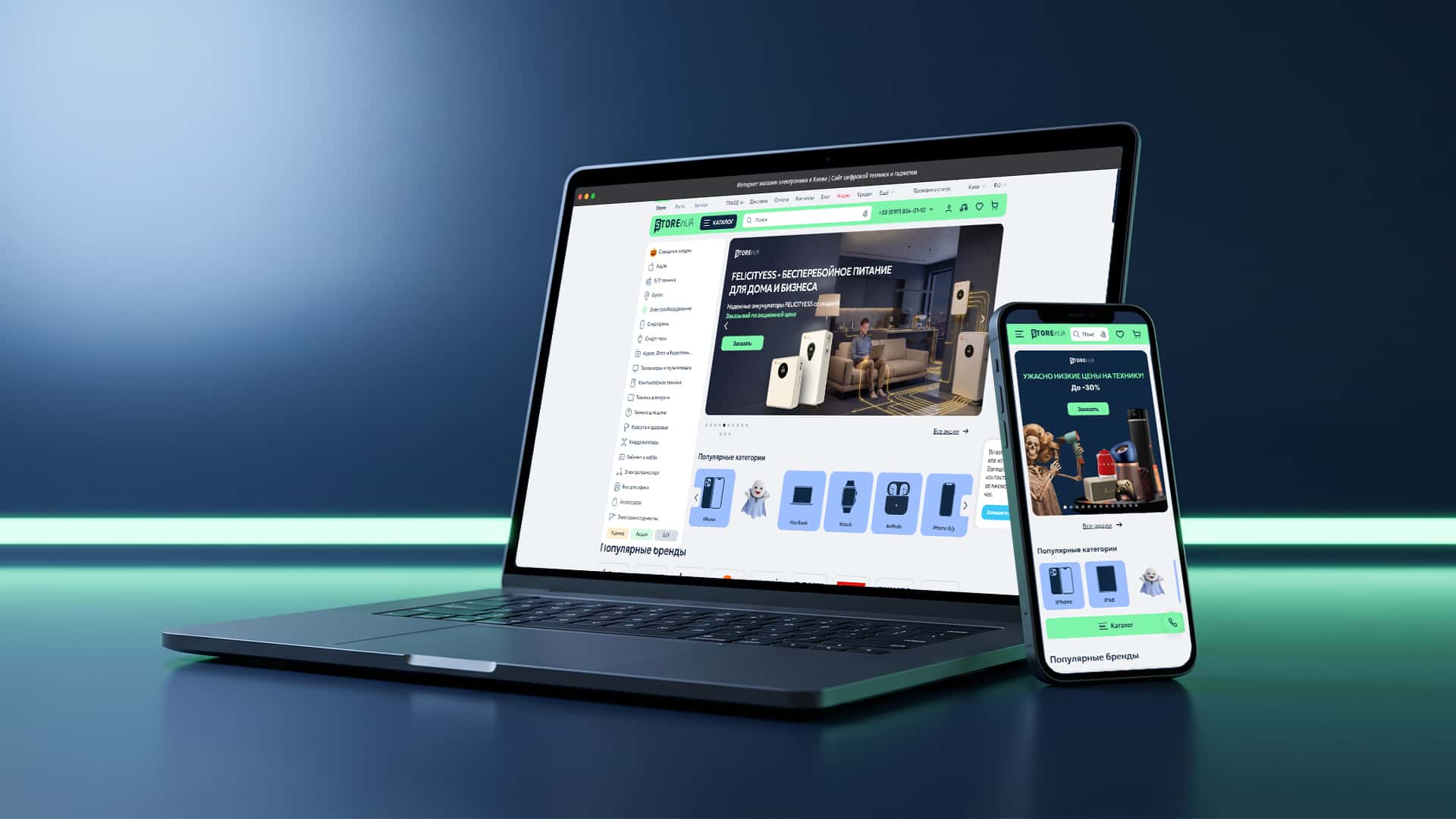 OCTOBER 2026eСommerce / DEVELOPMENT
Purchase conversion up from 1.4% to 3%: a new platform for 1M+ products with no sales stoppage.
Book a Clarity Session—a 30-minute review of your marketing. You will receive a map of bottlenecks and a clear understanding of the next steps.

Clarity first. Then — managed and systematic growth.
The team took a professional approach to upgrading site, ensuring high-quality project delivery without interrupting the store’s operations.
 Nikolay LuchinskyRetail Director / STOREinUA
To see what you are paying for. A context diagram shows which systems the product works with and where the risks are, without technical detail. It is the basis for estimating timelines, budget and the impact of changes.
UML is detailed but heavy and rarely clear to people outside development. C4-model is simpler: a few levels of detail and minimal notation, so both the owner and the team can read the diagrams. UML can still be used inside C4 for specific details.
No. The top-level diagrams are prepared at the architecture stage and save time later, because gaps in understanding the system surface before code is written, not after.
Yes, if they are maintained as code. We describe diagrams in text formats such as Structurizr or PlantUML and keep them next to the code, so they can be updated along with the system.
At GVSPACE we use C4-model at the architecture stage of complex systems: products with integrations, internal platforms, projects taken over from another team. We start with a context diagram for the business, then detail containers and components for developers. We keep diagrams as code next to the repository, so the architecture documentation is updated along with the system and stays with the client after project handover.